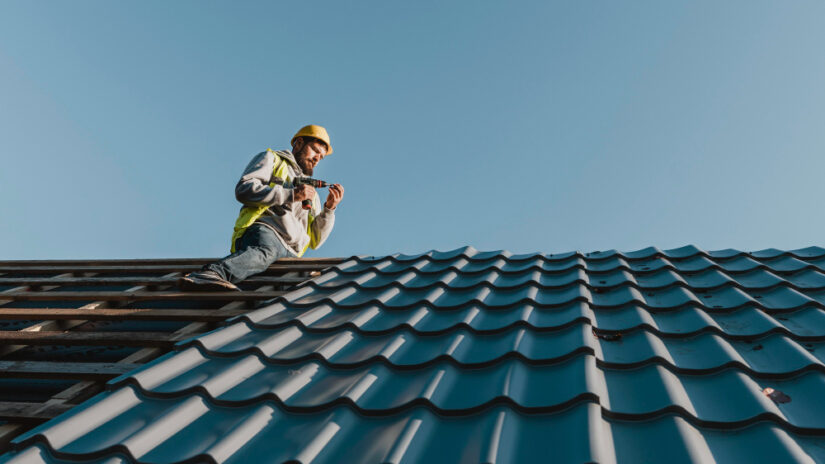
✓ TIP: Start documenting the problem as soon as you notice it. Photos, dates, weather conditions, and the location of interior moisture can provide useful information during a professional roof inspection.
Step 1: Control the Immediate Problem and Document What Happened
Your first priority is protecting people, operations, equipment, inventory, and interior finishes. During an active leak, focus on what you can safely control from inside the building rather than attempting to diagnose the roofing system yourself during bad weather.
Use this sequence:
- Identify the affected interior area. Note where stains, dripping, damp ceiling materials, or moisture have appeared.
- Protect vulnerable property. Move inventory, electronics, furniture, or equipment away from the affected area when it is safe to do so.
- Restrict access when necessary. Wet flooring, saturated ceiling materials, and water near electrical components can create additional hazards.
- Record the conditions. Photograph visible damage and note when the leak appeared and whether it occurred during or after rainfall.
- Arrange a professional inspection. The objective is to identify the source rather than simply treating the interior symptom.
One mistake is assuming that the interior leak location identifies the exact exterior failure. Water can migrate before it becomes visible, particularly on low-slope commercial roofing assemblies.
⚠ WARNING: Do not climb onto a wet commercial roof to search for a leak. Wet membranes and roofing surfaces can be slippery, and rooftop edges, equipment, skylights, electrical systems, and concealed weak areas can create serious hazards. Leave roof-level investigation to qualified professionals.
Once the immediate area is controlled, create a simple leak record. Property managers responsible for several buildings can benefit significantly from maintaining this information over time.
Leak documentation checklist:
- ✓ Date and approximate time discovered
- ✓ Interior location of the moisture
- ✓ Photos or video
- ✓ Recent weather conditions
- ✓ Previous leak history in the area
- ✓ Known rooftop work performed nearby
- ✓ Previous repair information, if available
This record helps turn an unexpected leak into useful diagnostic information.
Step 2: Inspect the Roofing System and Identify the Actual Cause
The next stage of Commercial Roof Repair Sacramento is diagnosis. A commercial roof should be evaluated as a system rather than as an isolated wet spot.
Depending on the roofing type and building configuration, an inspection may include the membrane or roof covering, seams, flashing, drains, roof edges, penetrations, rooftop equipment transitions, previous repairs, and other vulnerable areas.
Why does this matter? Consider a leak near an HVAC unit. The visible symptom may seem to indicate damaged roofing material, but the actual issue could involve flashing, a penetration, a transition, drainage nearby, or another detail entirely. Repairing the wrong location does not solve the underlying problem.
A useful inspection should help answer three questions:
- Where is moisture most likely entering?
- Is the problem localized or part of broader deterioration?
- What repair addresses the cause rather than only the symptom?
Pay particular attention to recurring leaks. If the same section of the building has required repeated service, another patch may not provide the best long-term answer. The surrounding roofing assembly and previous repairs deserve closer evaluation.
✓ TIP: Ask the roofing contractor to explain what was found and, when practical, show you photographs of the affected roof areas. Understanding the reason for the proposed repair makes it easier to evaluate the scope of work.
Property owners should also discuss the overall condition of the roof. An isolated failure on an otherwise serviceable system is different from widespread deterioration across an aging roof.
Working with experienced commercial roofing professionals can help you distinguish between those situations and understand whether targeted repair, additional maintenance, or broader planning should follow.
⚠ WARNING: Be cautious about automatically choosing the cheapest repair without comparing scope. Two estimates can use the word “repair” while proposing very different preparation, materials, affected areas, and corrective work.
Step 3: Complete the Repair and Create a Plan for What Comes Next
Once the cause has been identified, review the proposed repair before work begins. Commercial properties often have operational considerations that make planning particularly important.
A repair may need to be coordinated around tenants, employees, customers, deliveries, rooftop HVAC equipment, restricted areas, or other building activities. Ask how the contractor plans to access the roof, stage materials, protect the work area, and manage debris.
Before approving the repair, check:
- ✓ The affected area is clearly identified
- ✓ The proposed work addresses the diagnosed problem
- ✓ Materials and scope are explained
- ✓ Rooftop penetrations or flashing involved are included
- ✓ Building access and scheduling are understood
- ✓ Cleanup responsibilities are clear
- ✓ You know what documentation will be provided after completion
After the repair, do not simply close the maintenance ticket and forget about the roof. Record what was repaired, where the work occurred, and when it was completed. Keep photographs and contractor documentation with the building’s maintenance records.
Then consider the larger question: why did the problem develop?
If the issue resulted from an isolated damaged component, there may be little else required beyond monitoring. But if the inspection identified aging materials, drainage concerns, multiple deteriorating details, or repeated previous repairs, it may be time to establish a broader maintenance or capital-planning strategy.
Routine observation can also help. Roof drains and drainage paths should remain functional, and unusual conditions should not be ignored. Rooftop work performed by HVAC, electrical, solar, or other trades can also affect roofing components, so it is useful to inspect relevant areas after significant equipment work.
✓ TIP: Add roof reviews to your property’s regular maintenance planning instead of waiting for the next interior leak. Finding deterioration before water reaches occupied space can give you more time to evaluate your options.
Protect the Building Before the Next Storm
A commercial roof leak can feel urgent because the visible problem is happening inside an active business. The key is responding quickly without allowing urgency to replace proper diagnosis.
Remember the three-step process:
- Control and document the immediate interior problem.
- Inspect and diagnose the actual roofing failure.
- Repair and monitor the system while planning for future needs.
This approach gives property owners and facility managers more information than simply placing another patch over a suspected trouble spot. It also creates a documented history that becomes increasingly valuable as the roofing system ages.
If leaks begin appearing repeatedly, repairs are expanding, or several areas of the roof show deterioration, ask whether continuing isolated repairs remains practical. Repair versus replacement should be based on actual roof condition, the extent of damage, maintenance history, operational needs, and the property’s longer-term plans.
⚠ FINAL CHECK: Do not wait for a repaired roof to develop another interior leak before thinking about it again. Record the completed work, monitor previously affected areas, and schedule future evaluations when appropriate.
The purpose of professional Commercial Roof Repair Sacramento is not merely to make a ceiling drip disappear. A successful response identifies the source, addresses the damaged roofing components, and gives you a clearer understanding of the system protecting your commercial property. Handle the first warning sign correctly, and you will be in a much stronger position when Sacramento’s next period of wet weather arrives.